
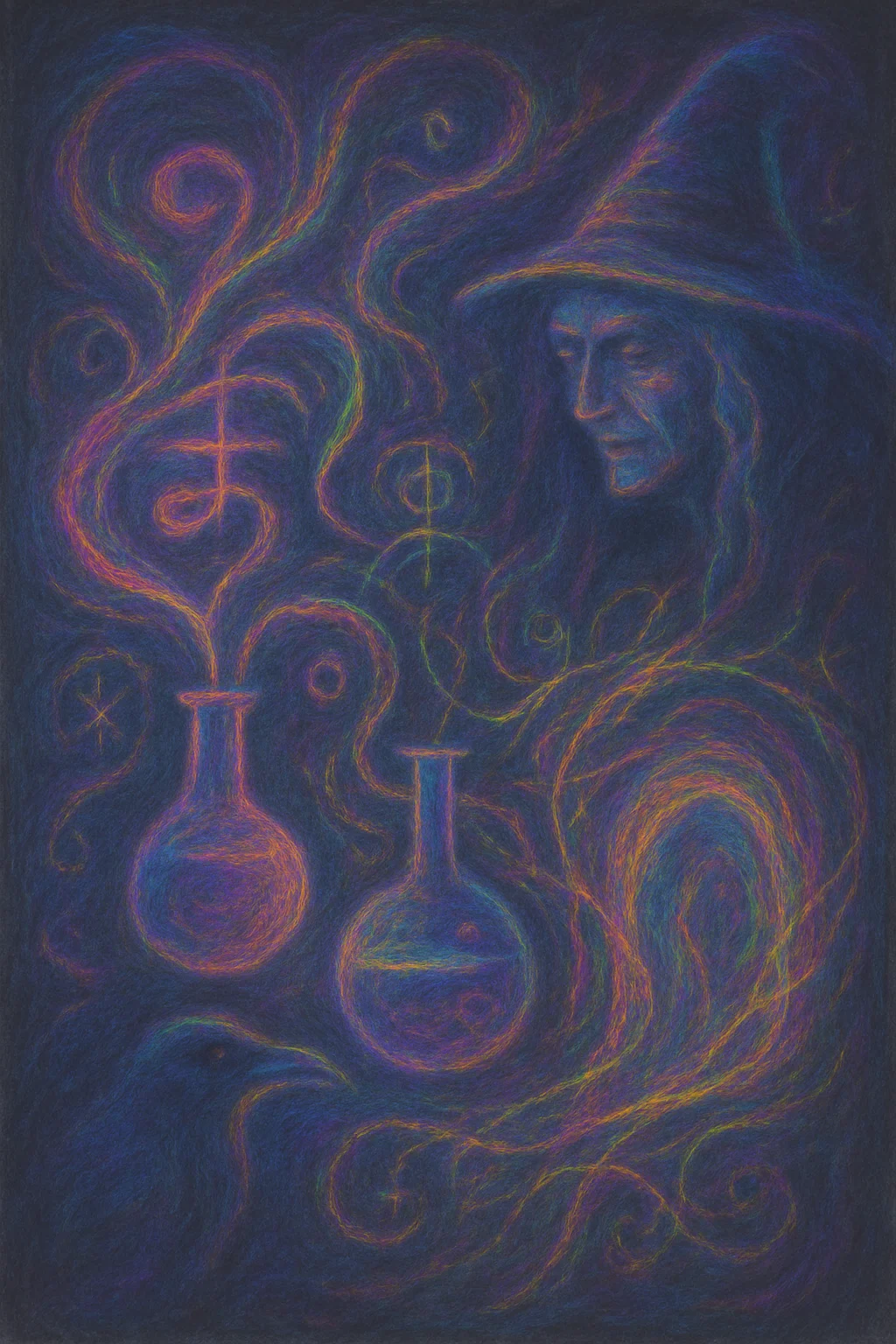

In our endless quest to understand the mysteries of the natural world, we often encounter two seemingly disparate approaches: one rooted in the rigorous observations of science, and the other in the symbolic, intuitive language of witchery. Despite appearing to occupy opposite ends of the spectrum, both disciplines arise from humanity’s profound desire to connect with the unseen forces of life and to unveil the secrets that govern our existence.
At its essence, science meticulously deconstructs the world into measurable parts, seeking to decode nature through empirical evidence and logical reasoning. It celebrates the clarity of observation, the precision of thought, and the power of experimentation. Meanwhile, witchery—often misunderstood as mere superstition—operates in a realm where symbols, rituals, and the energies of nature convey truths that are felt rather than quantified. This ancient art values the interplay of metaphor and experience, inviting us to recognize that the language of intuition can be just as meaningful as that of calculated analysis.
These two modes of knowing, though divergent in method, ultimately serve the same purpose: to reveal the hidden patterns that stitch together the fabric of our world. Witchery provides a framework to perceive and work with the subtle energies that influence life, drawing on the legacy of our ancestors and the residual magic of the natural world. Science, on its part, offers a systematic approach to understanding these energies through observation, measurement, and theory. In moments where they intersect, one might describe the alignment of celestial bodies or the transformative power of natural substances—realms where myth and measurement meet.
The dialogue between witchery and science can be seen as a dance between the rational and the mystical. Science asks questions of “how” and “why” based on visible phenomena, while witchery speaks to the heart, inviting reflection on the intangibles of human experience—the whisper of the wind, the subtle scent of an herb, and the eternal murmur of ancient lore. When these perspectives converge, what emerges is a richer, more nuanced understanding of reality—one that honors both the clarity of intellect and the depth of intuition.
In embracing this synthesis, we are reminded that our path to wisdom need not be confined to one discipline alone. Instead, by weaving together the threads of both empirical inquiry and mystical insight, we participate in a tradition that is as old as humanity itself—a tradition that celebrates the wonder of the cosmos and our place within its vast, interlaced tapestry.
Here, in the harmonious interplay of witchery and science, we find not conflict but a shared calling: to look beyond the surface, to appreciate the mystery inherent in all life, and to seek knowledge in every form it may take.
Discover more from Memento Historiarum
Subscribe to get the latest posts sent to your email.